Dead Man's Hand
Aces and eights: the odds, the story, and why A8 is a trap.
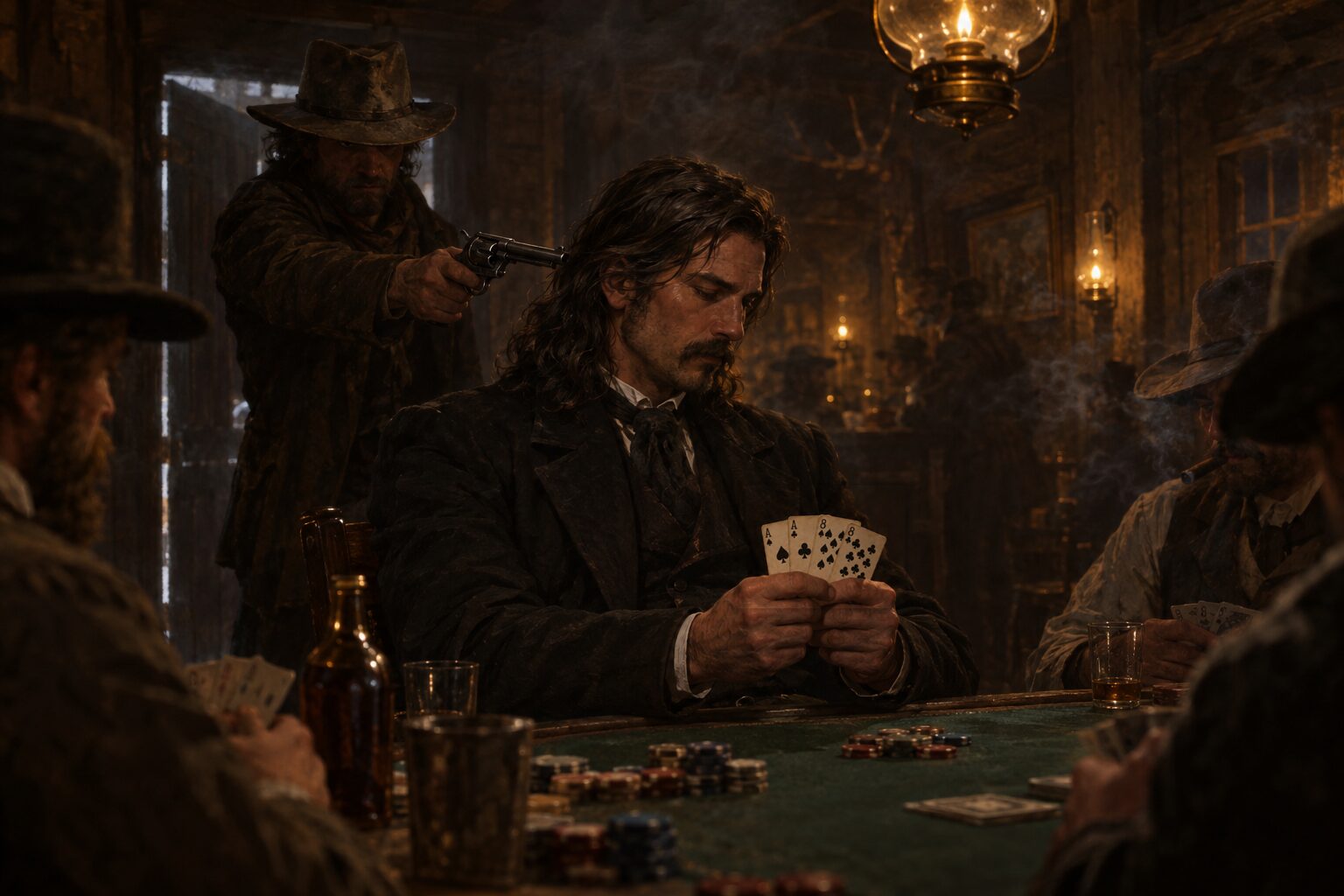
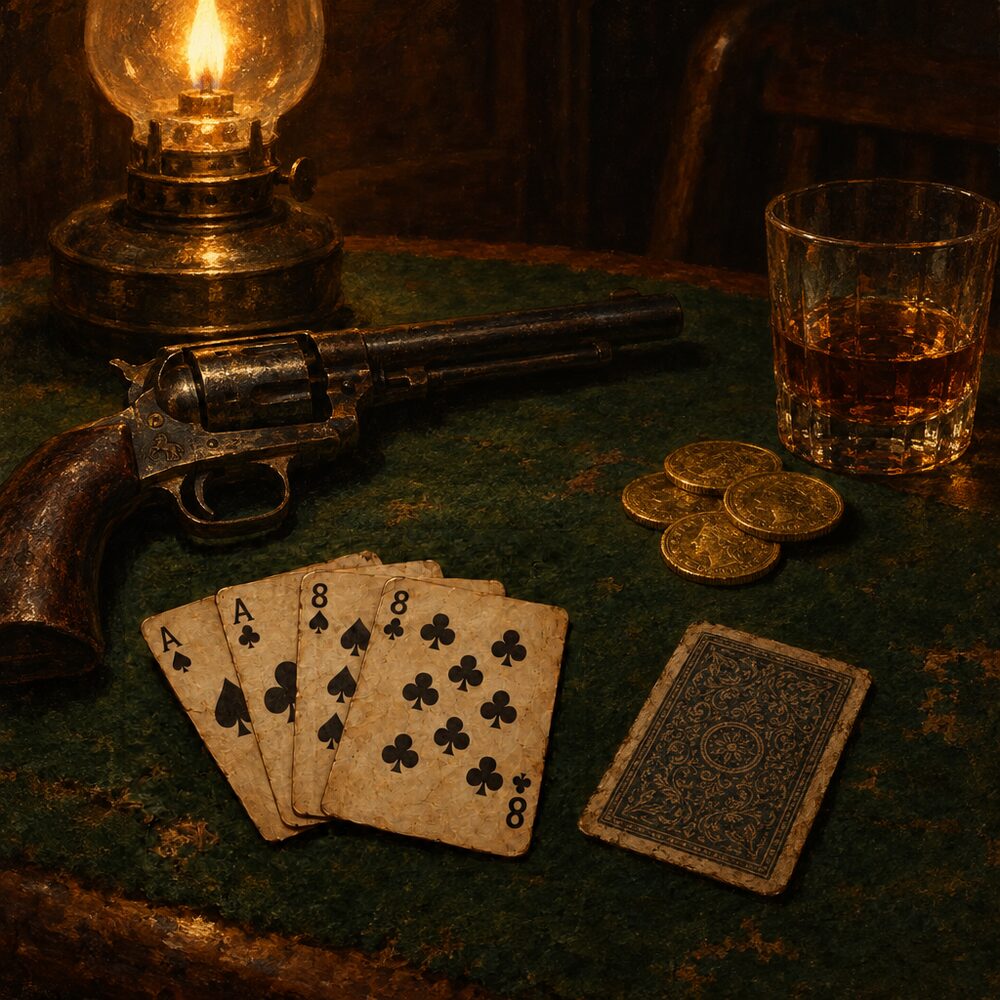
Deadwood, August 2, 1876: the moment before the shot.
Aces and eights: the odds, the story, and why A8 is a trap.
Deadwood, August 2, 1876: the moment before the shot.
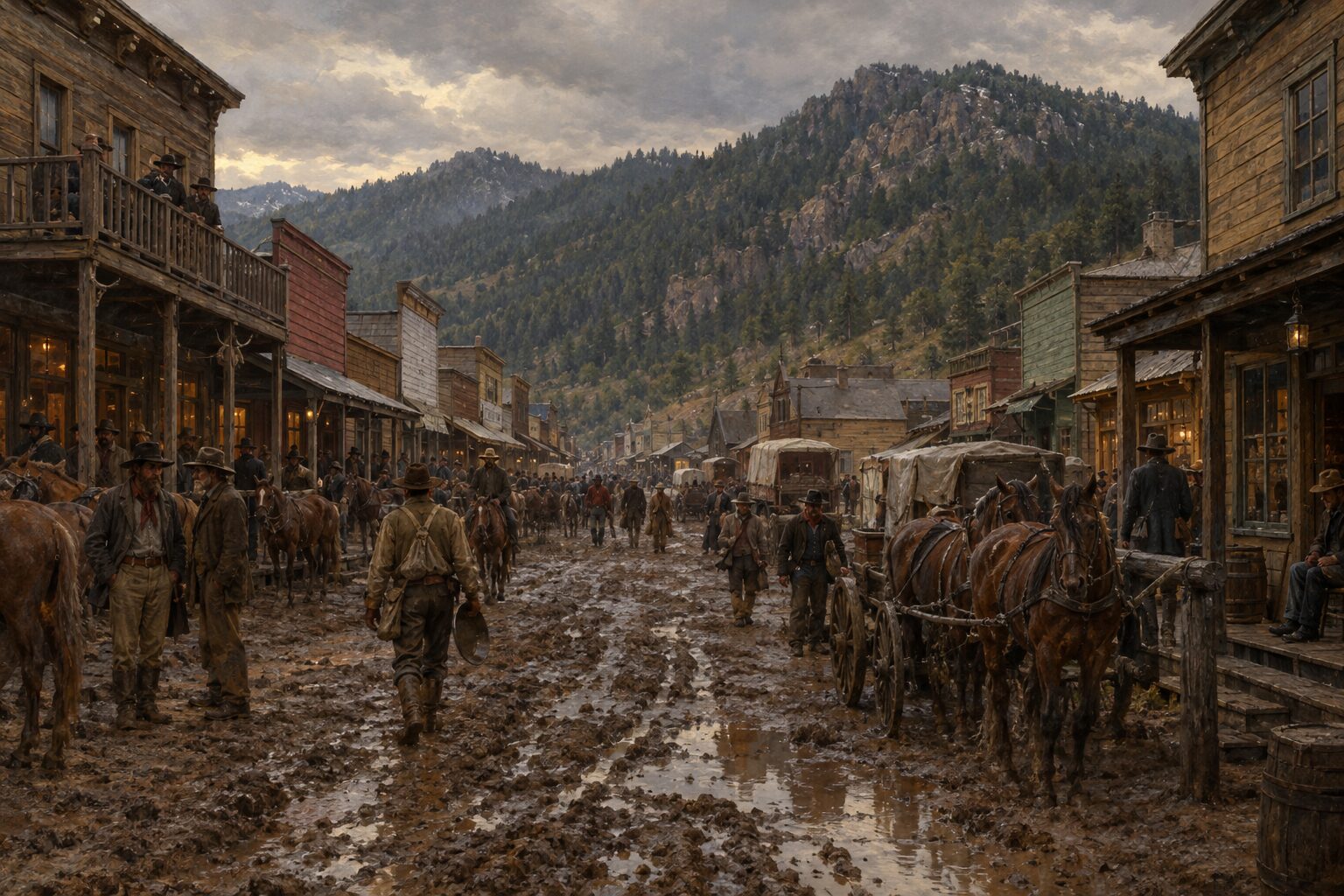
On August 2, 1876, Wild Bill Hickok was playing poker at Nuttal & Mann's Saloon No. 10 in Deadwood, Dakota Territory, a gold-rush town in the Black Hills. Jack McCall walked up behind him and shot him in the back of the head. Deadwood marked the 150th anniversary in August 2026.
According to the legend, Hickok was holding two pair: the black aces and the black eights. Accounts of the fifth card disagree. The Q♥, Q♦, 9♦ and J♦ have all been named, and some versions say he was waiting on a fifth card when he was shot.
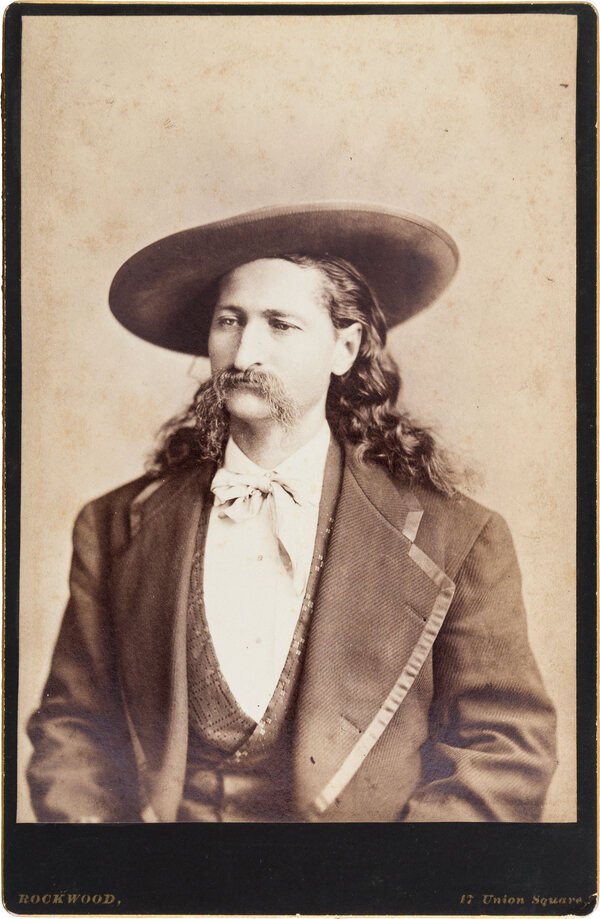
No one knows for sure. Three accounts have survived:
A miners' court in Deadwood acquitted him the next day. But Deadwood was an illegal settlement on Lakota land, so that court had no legal standing. McCall was arrested in Wyoming Territory after bragging about the killing, tried again in federal court in Yankton, convicted, and hanged on March 1, 1877. He was 24.
No one at the table wrote the hand down. "Dead man's hand" appears in print by 1886, but for other hands, among them jacks and eights. The phrase is first tied to Hickok in the 1920s, and Frank Wilstach's 1926 biography of Hickok is what fixed aces and eights as the hand, fifty years after Deadwood.
Whatever he held, the name stuck: aces and eights have been the dead man's hand ever since.
In five-card draw, a five-card hand is 5 cards from 52: 52C5 = 2,598,960 possible hands.
| Hand | Ways | Odds |
|---|---|---|
| Two pair, aces and eights (any suits) | 4C2 × 4C2 × 44 = 1,584 | 1 in 1,641 |
| The black aces and black eights | 1 × 44 = 44 | 1 in 59,067 |
| The black aces and eights with one specific fifth card | 1 | 1 in 2,598,960 |
The fifth card can't be an ace or an eight, which would make a full house, so there are 52 − 8 = 44 choices for it.
In Texas Hold'Em, A8 has inherited the name. On its own it is a decent hand: A8 offsuit has 59.88% equity against a random hand and ranks 32nd of the 169 starting hands in our simulations (1,000,000 trials per combination). The problem is other aces.
| A8 offsuit against | A8 equity |
|---|---|
| AK offsuit | 26.07% |
| AQ offsuit | 26.63% |
| AJ offsuit | 27.28% |
| AT offsuit | 28.29% |
| A2 offsuit | 65.71% |
All in before the flop, over every possible board. Equity counts a split pot as half a win.
When you hold A8, a single opponent is dealt a better ace (A9 through AK, or AA) about 1 time in 20: 63 of the remaining 1,225 hands. Add opponents and that climbs fast:
| Opponents | At least one has a better ace |
|---|---|
| 1 | 5.14% |
| 2 | 10.11% |
| 3 | 14.91% |
| 5 | 24.01% |
| 8 | 36.44% |
Those are random deals. In real hands it is worse, because the players holding AK through A9 are the ones still in the pot when an ace comes. That's reverse implied odds: when you hit your ace, you win small pots against worse hands and lose big ones to better aces.
Starting with aces and eights is a different story in Omaha. AA88 double suited has 70.55% equity against a random hand and ranks among the ten best Omaha starting hands in our simulations.
Finishing with aces and eights is not. In Omaha you always play exactly two of your four cards and three from the board, so a hand like A♠ 8♥ 7♦ 2♣ on a board with an ace and an eight makes two pair, aces and eights. That's the same trap as A8 in Hold'Em, only worse: with four cards each, opponents make straights, flushes and sets far more often, and bigger two pair like aces and kings, so two pair rarely holds up.
| Opponents | Aces and eights equity |
|---|---|
| 1 | 68.09% |
| 3 | 32.31% |
| 5 | 16.07% |
A♠ 8♥ 7♦ 2♣ against random hands, on boards with an ace and an eight where its best hand is exactly aces and eights (200,000 boards each; equity counts a split pot as a share). Opponents who stay in a big pot hold stronger hands than random ones, so in practice it does worse.
More on starting hands, combinations and the math behind them on the poker combinatorics page.
The dead man's hand is two pair, aces and eights, traditionally the black aces and black eights. Legend says Wild Bill Hickok was holding it when he was shot at a poker table in Deadwood, Dakota Territory, on August 2, 1876.
The A♠, A♣, 8♠ and 8♣. The fifth card is disputed: the Q♥, Q♦, 9♦ and J♦ have all been named, and some versions say Hickok was still waiting on a fifth card.
Usually mortality, fate and the risk in every gamble: aces and eights as a reminder that luck can run out. Many people choose a fifth card of their own, since history never settled Hickok's.
Jack McCall shot him in the back of the head while he played poker at Nuttal & Mann's Saloon No. 10 in Deadwood on August 2, 1876. Hickok was 39. He is buried at Mount Moriah Cemetery in Deadwood, where he was moved in 1879.
A miners' court in Deadwood acquitted him, but the court had no legal standing. He was arrested in Wyoming Territory, retried in federal court in Yankton, convicted and hanged on March 1, 1877.
In five-card poker, two pair of aces and eights comes 1 time in 1,641. The exact black aces and black eights, with any fifth card, come 1 time in 59,067.
Test your hand against a range on any board with the NextGenPoker Odds Calculator.